Ullstein and Life_Ticker
Photojournalism in the 20th Century
 Back
BackInterview with Prof. Patrick Rössler, Media and Communication Studies, University of Erfurt
Starting in November 2026, the Kunsthalle Erfurt will present the exhibition Life_Ticker – Photojournalism in the 20th Century. The curator of this exhibition, Prof. Patrick Rössler, teaches communication studies at the University of Erfurt.
______________________________________________________________
Mr. Rössler, for this exhibition, you didn’t just browse through the Ullstein Photographic Collection – you conducted extensive review and research to identify the key exhibits. Were you aware of the potential offered by one of the most extensive photography collections?
It’s true that the collection at ullstein bild is legendary. But hearsay quickly pales in comparison once you stand in this magnificent hall with its endless filing cabinets… Of course, you form certain expectations of what to expect, but this overwhelming wealth of visual heritage is unimaginable unless you’ve seen it with your own eyes. Just “taking a look around” wouldn’t have gotten me very far here – my exhibition has academic aspirations, and that requires meticulous research; I owe that to my audience.
The results of these reviews are reflected in a diverse and substantial selection of original works from the ullstein bild collection, which can now be displayed in the Erfurt exhibition. What spectrum of visual journalism does this open up?
The exhibition spans the entire 20th century; the selected works from the Ullstein Archive all date from the interwar period, the first golden age of photojournalism in Germany. The exhibition wouldn’t be complete without some classics by Martin Munkácsi, Umbo, and Yva; but there is also much to marvel at that had fallen into obscurity since its publication nearly 100 years ago. These include lesser-known works by well-known photographers, as well as discoveries that have never before been shown in an exhibition.
Regarding the concept behind this exhibition – to present photographs and their publications side by side on an equal footing for the first time – what insights can be drawn under these circumstances, and what new perspectives can visitors to the exhibition expect?
A single photographic print has a hard time making a political or social impact: it is its dissemination in the mass media of the time that gives a photograph its significance. We consistently and exclusively present the prints and their reproductions side by side to illustrate the contexts in which the images were published and, above all, the type of medium in which they appeared, the target audience they were intended for, and the impact they had. Visitors must endure a great deal of repetition – the same motif, sometimes printed in three or four different versions, cropped, colored, reversed, or rotated. It becomes clear that there is no single “image”; rather, in addition to the photographer, photo editors have also played a significant role – through their selection and editing – in shaping what we now regard as the photographic canon of the 20th century.
What implications do the insights gained here have for our current perception of images and photography?
Today, people are taking more photos than ever before; each of us has our own massive photo archive on our mobile devices or in the cloud. And even the selection of photos that makes it into the digital public sphere via websites, Instagram, Facebook, or other social media platforms is now almost impossible to make sense of. But even so, there have always been – and still are – certain images that stand out from the crowd – and they maintain this status through the attention they receive from others, whether it was photo editors in the past or “likes” and comments today. This draws attention to certain images, which, in the best-case scenario, become part of our visual memory. These individual photos still have the power to capture a complex situation in a single moment. We just have to make the effort to look closely, instead of simply swiping past them in a fraction of a second.
Is there a “selection” among the Ullstein exhibits that emerged for you during the preparations for the exhibition – one that could be defined, for example, by its particularly high expressive value?
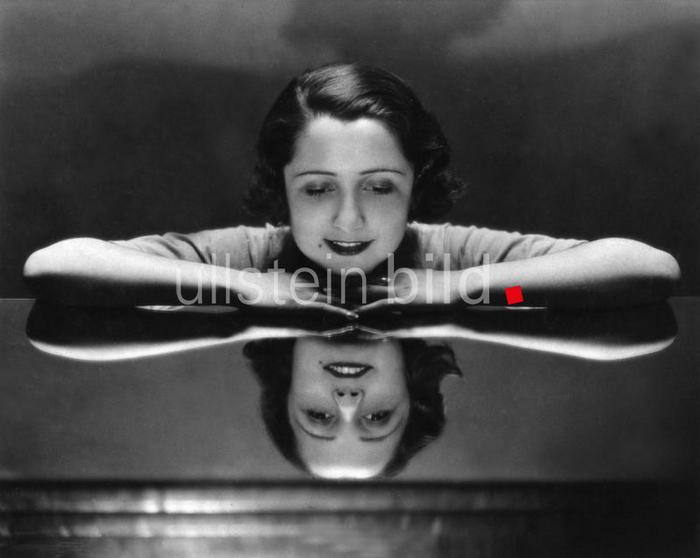
First of all, most of the Ullstein exhibits are particularly significant because, in almost all cases, the publication history was noted on the back. Whereas researching a photograph and its publication history would otherwise often be like looking for the proverbial needle in a haystack, the handwritten notes from the Ullstein archivists frequently indicated where a reproduction of the motif in question could be found. But if you ask me about specific photos that have taken on special meaning for me, they undoubtedly include the two young women on the motorcycle who grace our poster and embody the zest for life of many young people in the 1920s. We know today how short-lived that spirit of optimism was and what catastrophe it would lead to – but these two teenagers have no idea. Another of my favorites is conceived quite differently: In a photo series, Karl Schenker photographed his wife Lilli in various styles and with changing expressions, thereby not only creating a tongue-in-cheek allegory of sociological concepts of gender roles, but also exposing the supposed “objectivity” of the camera’s eye as a seemingly incorruptible observer of its time.
What insights and connections do you aim to convey – particularly to your students – through this exhibition?
All the young adults I teach today are digital natives who have grown up in a world where images are so ubiquitous that you’re constantly teetering on the edge of sensory overload. In the face of this deluge of images, the exhibition counters a sense of helplessness with a clear-eyed look at the processes that can lift motifs out of their randomness. Whether your future career goal is journalism, advertising, and PR, political consulting, or corporate communications, understanding these mechanisms is just as helpful as knowing some of the classics from the history of photography that are referenced today in memes or pop culture.
Mr. Rössler, thank you very much for this interview!
Questions by Dr. Katrin Bomhoff, ullstein bild collection
First published on September 10, 2026.
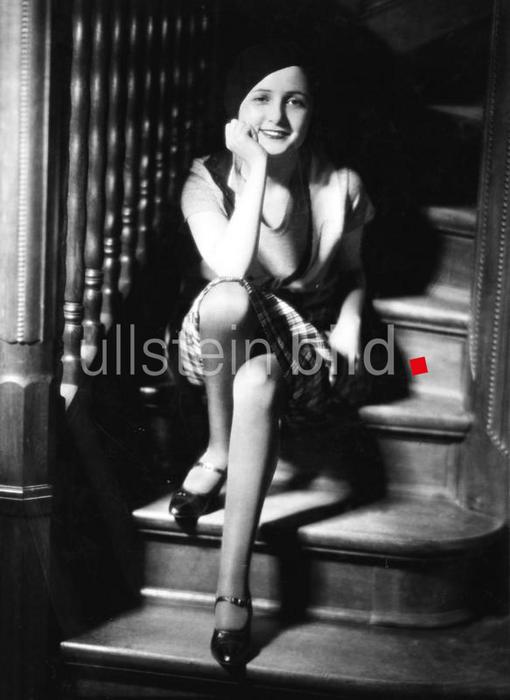
In the gallery, you can view a selection of original photographs from the Ullstein Photography Collection, which are also on display as part of the Life-Ticker exhibition at the Kunsthalle Erfurt.
You can find the photo dossier on this topic at ullstein bild.
Picture gallery