Today!
Fragment and Photography at Ullstein
 Back
Exhibition Life_Ticker – Photojournalism in the 20th Century. Kunsthalle Erfurt
Text accompanying the exhibition by Dr. Katrin Bomhoff
Summary:
The Ullstein Collection illustrates how photography and publishing together shaped public visual journalism in the 20th century. Ullstein placed photography at the center of its publications early on and collaborated with prominent photographers such as James E. Abbe and Martin Munkácsi. Original contact sheets, photo essays, and accompanying texts document global themes, including the Zeppelin flight from Berlin to Rio de Janeiro and journeys through the U.S. and Russia.
Photography and publication – in today’s Ullstein photography collection, this connection sets the tone; at Ullstein Verlag in Berlin, the goal was always clear: publication. Often, it is only the newspaper or magazine page that reveals the context in which a photograph was viewed at the time it was taken – and, more specifically, the purpose for which it was used. A key factor was that, at the beginning of the 20th century, Ullstein Verlag – a major player in the publishing world – increasingly established itself in Berlin and, from there, conquered the market with a diverse range of titles such as Uhu, Tempo, Die Dame, and Berliner Illustrirte Zeitung. Examining the rhythm with which these photographs were published raises new questions and leads to new conclusions. What has driven him throughout the vastly different decades of the Ullstein photographic collection? What kind of alliance between text and photograph has he forged, and what results has he produced? As can be seen in the current exhibition Life Ticker, each individual instance of a published photograph conveys its own unique context. The claim made by the Berliner Illustrirte Zeitung as early as 1919 regarding photography – that it serves as the “microscope of contemporary history for the global citizen” - offers insight into the early discussions about photography as well as the resistance it faced. For with the advent of snapshot photography and photojournalism, the demand for these forms grew on the one hand, while on the other hand, questions arose about their legitimacy and limitations.
What characterizes Ullstein’s day-to-day engagement with images of everyday life? To shed light on this topic, we can draw on other important sources in addition to photographs and newspaper articles: original documents and artifacts that have survived the passage of time, even if little significance has been attributed to them thus far-carefully worded letters, detailed captions, signed works, and brief correspondence. They all make it clear: The extensive core of the Ullstein photographic collection includes individual documents that provide insight into daily work and routines; they clarify or confirm procedures and contexts.
From the very beginning, a wide variety of editorial teams regularly explored the possibilities of photography. Creative minds at Ullstein, such as Artistic Director Kurt Safranski (1890–1964) and Editor-in-Chief Kurt Korff (1876–1938), devised concrete plans; they knew their audience and engaged key, first-rate photographers. An original document by photographer James E. Abbe (1883–1973) preserves the legacy of these two key figures at Ullstein. His letter from Hennequeville, France, dated December 28, 1928, is addressed to Kurt Safranski and, in addition to conveying the image material, documents a personal connection between the two individuals. The correspondence was prompted by the need for captions for the images to be published. Abbe produced a remarkable series of portrait photographs for Ullstein featuring the Russian actress Ludmilla Pitoeff and her family; these original photographs are also part of the Ullstein photographic collection today. At the end of his letter to Safranski, he writes: „The children were delighted with the Christmas presents you sent them. It speaks well for German made toys that John (the youngest and most destructive) has not yet been able to remove the eyes from the toy dog, although he has not yet given up in despair.“ Just a side note, but one that illustrates how personal contact between decision-makers and photographers – sometimes spanning years – fosters dialogue regarding the reorientation and design of publications.
From the very beginning, the Berliner Illustrirte Zeitung was firmly committed to visual storytelling, having “introduced visual reporting through photography and drawing in a completely unprecedented way.” This is how editor Max Osborn retrospectively described the publication’s new direction in an article for the 1929 compendium Der Verlag Ullstein zum Weltreklamekongress Berlin Ullstein consistently pursued the goal of placing photographs at the center of its publications and harnessing their expressive power over the years. Under the headline “ A New Artists‘ Gild. The Photographer Conquers New Territory,” Uhu published a multi-page feature in October 1929 featuring portraits of the photographers Emil Otto Hoppé, Sasha Stone, Martin Munkácsi, James Abbe, Albert Renger-Patzsch, André Kertész, Dr. Erich Salomon, and László Moholy-Nagy. Four years later, he grouped his female colleagues under the heading „Men in Front of the Camera“ – featuring the photographers Nini and Carry Hess, Riess, Yva, Becker, and Maass, Gerty Simon, Erna Lendvai-Dircksen, and Elli Marcus. It is both a tribute to and a commitment to the photographers.
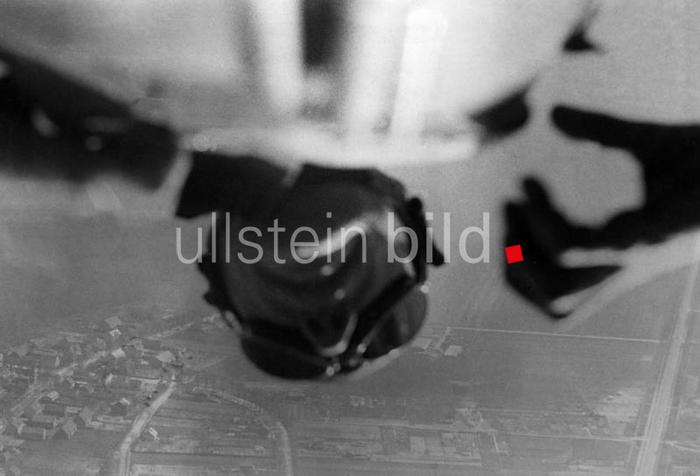
Ullstein enjoyed an intense and successful collaboration with photographers such as Martin Munkácsi (1896–1963). This is evident in another highlight of the exhibition: an extensive series of contact prints documenting the Zeppelin LZ 127’s flight to South America, accompanied by captions – some of which are handwritten. As reference material, these small-format, handy prints allow the viewer to quickly gain an overview of the photographic theme and the available images. The texts written in Hungarian, on the other hand, document the visual artist’s contribution to this major event – the Zeppelin flight from Berlin to Rio de Janeiro. The extraordinary nature of the undertaking is reflected not only in the photographs but also in the detailed accompanying text, which states right at the beginning: “So the big question has been answered! … The trio of Count Zeppelin, Maybach, and Eckener – these three brilliant minds of science – has conquered time and space. It has given shape to Verne’s dreams. It has made the dream of the visionaries a reality… The Count Zeppelin regularly travels between Europe and South America.” In the original: „Tehát megoldodott a nagy kérdés!... A Gráf Zeppelin-Maybach-Eckener-trio, a tudomanynak ez a három ragyogó artistaja, áttornázta as idöt s a teret. Pontok tett a Verne-féle almok fölé. Megvalositotta a fantaszták álmát… A Graf Zepplin menetrendwzeruen közlekedi Europa és Délamerika között!“ As a commissioned work for Ullstein, Munkácsi’s photographs naturally also found their way into the publications. An impressive series of large-format photographs serves this purpose. They make their full impact in the issues of the Berliner Illustrirte Zeitung. And for good reason: the transatlantic flights under Hugo Eckener are considered record-breakers and represent an enormous technological advance; the regular, direct service between Germany and Brazil, which operated from 1931 to 1937, ranks among the great achievements of its time.
Maintaining a connection to every continent and continuously exploring the world have been among photography’s achievements from the very beginning. A successful enterprise like that of the two photographers Georg (1873–1942) and Otto (1872–1945) Haeckel embodies this mission: photographs from all over the world. In fact, Ullstein’s comprehensive collection leaves almost nothing to be desired for the “microscope of the global citizen,” characterized by a keen interest in human life, thought, and action. In the next generation of photographers as well, travel and reportage photographs provide insight into everyday life, politics, culture, and the economy around the world. James A. Abbe sent Ullstein detailed texts from the U.S. and Russia along with his photographs. As historical records, they serve as an important supplement to the publications. In the case of the photo series on Chicago, he frames his report with pithy summaries. He notes the following about the city and its residents: „Chicago furnishes the thrills to standardized America, shocks to the dignified old worlds, and amuses itself in the most wholehearted manner possible.“ Finally, he describes the people: „… a people who go to the limit in everything they undertake.“ It is not difficult to relate to these impressions when looking at the 1931 photograph taken in Chicago of Abbe surrounded by four detectives – in the midst of a country facing economic crisis and social extremes. Nevertheless, in addition to their outstanding quality as reportage photographs, many of his photographs convey the image of a highly progressive and up-and-coming part of the world. The same cannot be said of his trip to Russia in the 1920s. His report, marked with the handwritten note „To-day!“ begins with a conclusion: „Moscow University is no longer the Heidelberg of Russia.“ Reasoning: „The graduates must be technical experts; it is not considered they know even Russian history, or Russian literature, except that which has a direct bearing on the revolution.“ The text describes the lives of students and faculty under the new political conditions and in the wake of a revolution that has left a significant mark on all areas of society.
Every text written by a photographer reflects his knowledge of the subject and his experiences, and conveys a sense of his personality. Take, for example, Waldemar Titzenthaler (1869–1937), who handwrote comments on a set of photographs of the Brandenburger House in the Ötztal Alps for the editorial staff of the Berliner Illustrirte Zeitung in 1909. Take Friedrich Seidenstücker (1882–1966), for example, who wrote an accompanying text dated October 1933 for his impressive photo series on bell casting in Apolda. All of the documents attest to the close ties between the photographers and the Ullstein publishing house in Berlin, whose key figures, with great intuition and a wealth of knowledge, forged the connection between photography and the public.
In the gallery, you can view a selection of original photographs and exhibits from the Ullstein Collection. The complete collection of images for all Ullstein exhibits featured in the Erfurt exhibition can be found at ullstein bild: Part 1 and Part 2.
Interview with Prof. Patrick Rössler, Department of Media and Communication Studies at the University of Erfurt, on the topic of Ullstein and Life Ticker.
Picture gallery