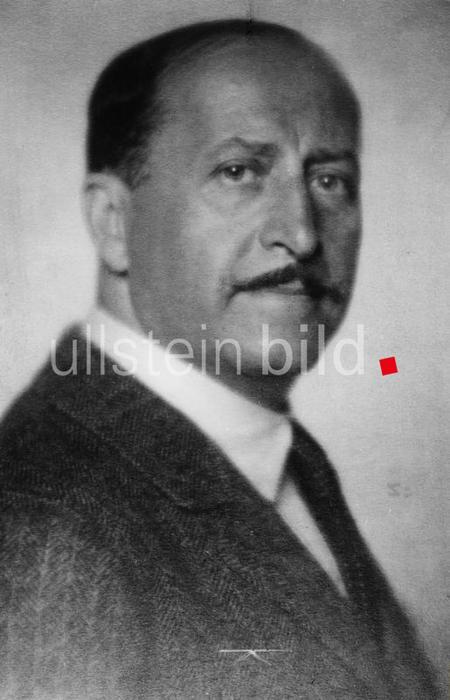
Kurt Safranski's Dummy.I from 1934
Photojournalism at UIlstein in Berlin – for New York
 Back
BackInterview with Phoebe Kornfeld, lawyer and author of Passionate Publishers – The Founders of the Black Star Photo Agency, Portland / Maine
SUMMARY:
The interview with Phoebe Kornfeld sheds light on the creation and significance of Kurt Safranski’s 1934 dummy for an illustrated magazine, which played a decisive role in the founding of the American magazine Life by highlighting Safranski’s innovative approach to photography, his experiences and successes at Ullstein in Berlin, and his collaboration with U.S. publishers such as Hearst and Luce, while pointing to the hitherto little-known, but fundamental role of Safranski and Korff in the reestablishment of photojournalism. At the same time, it sheds light on the current Ullstein photographic collection at ullstein bild, which is directly linked to this – as the result of decades of groundbreaking developments in press photography.
______________________________________________________________
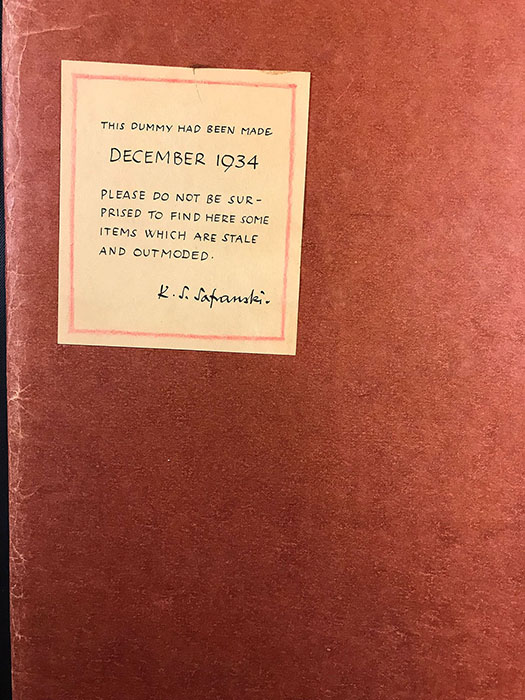
Ms. Kornfeld, we’ve already discussed Kurt Safranski (1890–1964) – who served as artistic director and managing director at Ullstein in Berlin in the 1920s – and the unique 1934 photo book. Now we turn to an equally remarkable exhibit from the same year that you came across during your research in New York: Kurt Safranski’s Dummy, the prototype he designed for a new illustrated magazine intended for the American market. This project was conceived in the wake of his irrevocable departure from Berlin and his impending emigration to the U.S., and reads like a compendium of his long-standing, highly successful work for the Ullstein Publications. To put it simply, one could speak of a kind of “basic formula” for his working methods that is evident here: the interplay of photography and text, a focused selection of topics, and expressive power point to his design approach, his relevance to current events, and his market-sensitive handling of themes. Safranski’s Dummy consists of fragments and rough ideas; the themes are not fully developed, but rather open up possibilities. Possibilities that were immediately apparent to his conversation partners in 1934: not only to Kurt Korff, the Ullstein editor-in-chief who was hoping to emigrate to the US, but also to the U.S. publisher William Randolph Hearst, the head of Hearst’s New York publishing office, Richard Berlin, and finally – together with Kurt Korff – to Henry Luce, the founder of Time Inc. This collaboration between Luce, Safranski, and Korff was pivotal in reshaping the American magazine market, introducing a new-yet at the same time, a proven and sophisticated-approach to press photography that had already been tested at Ullstein in Berlin: it led to the launch of Life magazine in November 1936. And now, let’s take it step by step.
Ms. Kornfeld, you have already pointed out these connections in your book Passionate Publishers and have now consulted both old and new sources on this subject. What sources, and what conclusions?
Dr. Bomhoff, thank you so much for giving me this opportunity to revisit this important moment in the history of photojournalism. In Passionate Publishers, where I provide biographies of Ernest Mayer, Kurt Safranski and Kurt Kornfeld, the founders of the Black Star photo agency, I addressed this subject in a few pages of chapters 24 and 25. In the meantime, however, I have had access to material I was previously unaware of in the form of four hours of taped interviews conducted in 1975 by the British photographer and magazine editor Colin Osman with Safranski’s widow, Mania Safranski, and his daughter, Tina Fredericks. What I heard there caused me to review again the correspondence in the Safranski Archive, where I identified additional details that fill out the picture. I am now convinced that Life magazine’s debt to Kurt Safranski was so great as to be unquantifiable, and, consequently, we are all in debt to Kurt Safranski. For who can imagine the twentieth century without Life?
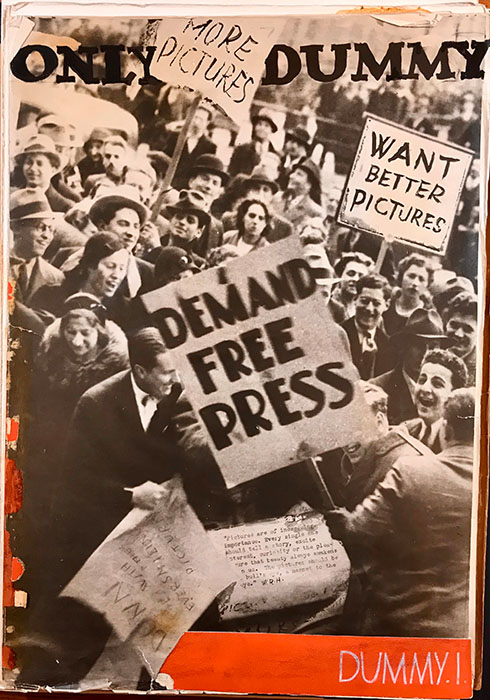
Even the cover page of Safranski’s Dummy makes important statements and puts forth demands: “More Pictures,” “Want Better Pictures,” “Demand Free Press,” alongside a quote from Hearst: “Pictures are of increasing importance. Every single one should tell a story, excite interest, curiosity, or the pleasure that beauty always awakens in us. The picture should be the bull’s-eye, a magnet to the eye.”
Yes, Safranski’s cover for his Dummy is ingenious. His focus on the will of the common people demonstrating for more and better pictures and demanding a free press spoke directly to William Randolph Hearst’s own interests as a publisher. Then Safranski exhibited his highly developed marketing skills by quoting from a speech that Hearst had made about his philosophy of the role of the photograph in journalism that was closely aligned with Safranski’s own and which he set out to actualize in his innovative Dummy. Safranski himself remained proud that the ultimate cover of Life had incorporated his bleeding edges and capitalized clean sans serif white on red lettering for the title of the magazine.
Under what circumstances did the key meetings between the parties involved take place?
Kurt Safranski was anxious to leave Nazi Germany. The Gestapo had twice been to his home, and he was unhappy that his daughter was forced to leave her Montessori school and attend one for Jewish children. At the end of September 1934, he arrived in Manhattan, having accepted a position with Hearst’s International Magazine Division, which was run by Richard Berlin. Safranski made initial preparations that led to his Dummy, which used only “available pictures”, “copies of copies.” His daughter confirmed in her interview with Colin Osman that Safranski showed the Dummy to Hearst along with a cost estimate for a proposed new illustrated magazine, but that financial constraints prevented Hearst from being able to pursue the project.
Following an interview with PhD candidate Otha C. Spencer in 1956, Safranski corresponded further with him and included in those letters important details about what happened next. Keen to see his concept for a new illustrated magazine actualized, but also a loyal employee and grateful for having escaped Nazi Germany by means of the job offer from Hearst, Safranski received permission for the Dummy to be shown to Henry Luce, head of Time Inc. Safranski had convinced Kurt Korff to travel to the US in late November, hoping that the two men would work together on a new pictorial magazine at Hearst, however, Korff also brought with him a letter of introduction to Luce that facilitated a meeting in early December.
Luce had once before considered starting such a magazine, but lacking confidence in the likelihood of success, he had shut down the project. The Dummy and ideas presented by Safranski and Korff, however, renewed his enthusiasm for a US illustrated magazine to equal or exceed the quality of those already being published in Europe. An experimental department was set up at Time Inc., Korff was brought on as an advisor to the editor Daniel Longwell, and in November 1936, the first edition hit the newsstands. I think it is fair to say that Luce’s meeting with Safranski and Korff was the catalyst for Life magazine.
What parallels or foundational elements from the Ullstein era in Berlin do you see in Safranski’s work?
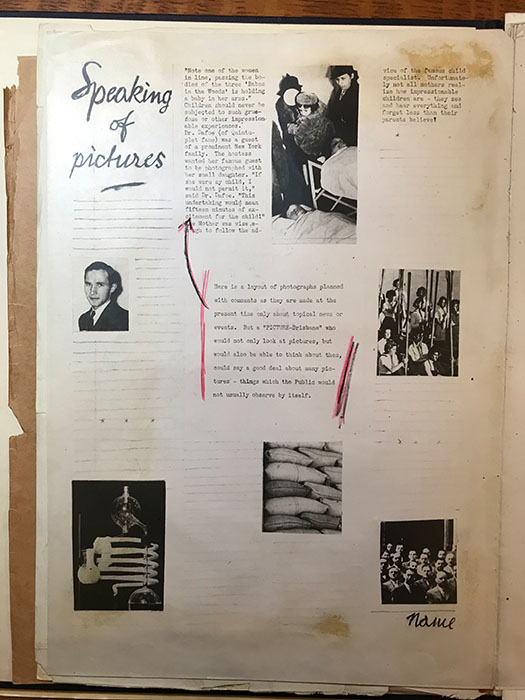
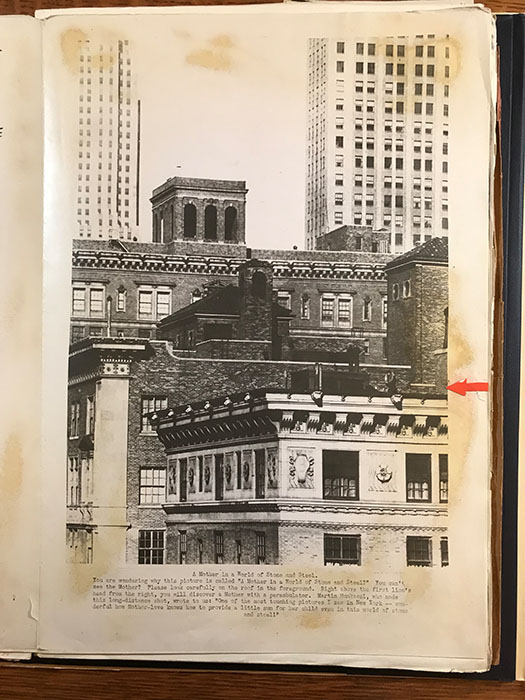
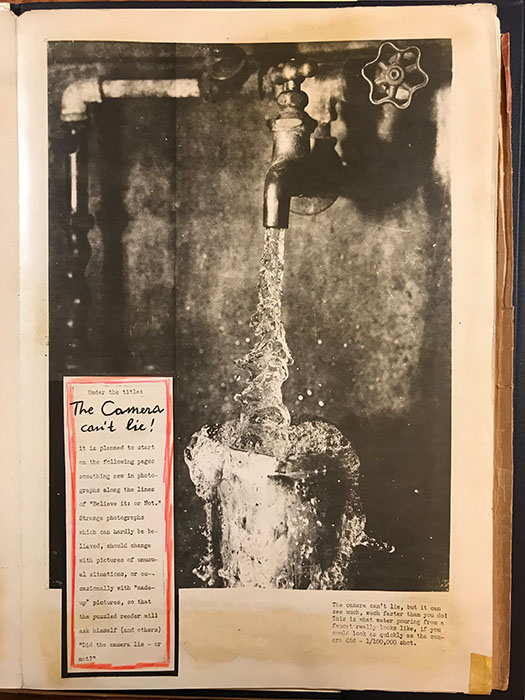
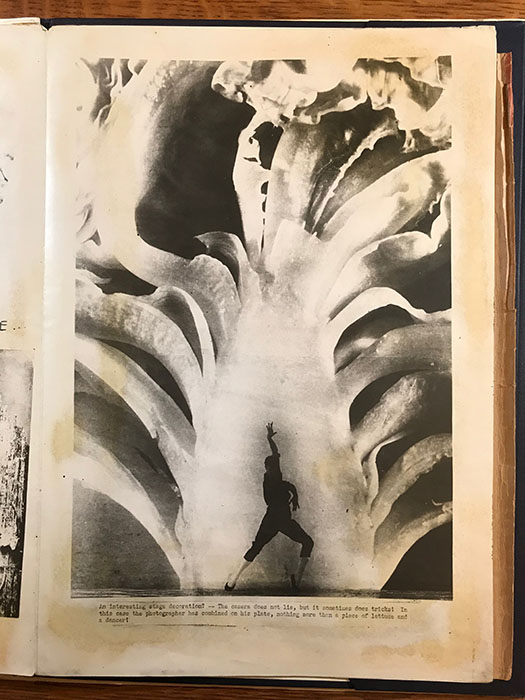
As head of Ullstein’s magazine division, Safranski was responsible for the development of a wide range of publications such as the Berliner Illustrirte, Uhu, Die Dame, Der Querschnitt, Der heitere Fridolin, and Koralle, each for a targeted audience and including a limited range of subject matter. Together with Kurt Korff, he understood the value-add of using photographs in journalism and advanced the know-how for doing that. What Safranski presented in his Dummy was a distillation of the expertise he had developed at Ullstein. Using a photojournalistic style even more cutting edge than that of the Berliner Illustrirte Zeitung, in the Dummy he presented a magazine for a broad audience by including the range of material focused on in all of those Ullstein magazines. The Dummy covers topics such as: distinctive photographic moments entitled “Speaking of Pictures,” a feature that Life incorporated under the same heading; important people; daring adventures; scientific and technological advances; crime; war; nature; international events; fashion; sports; and film. All of that and more in just over thirty pages.
What innovations shaped the American magazine market in the 1930s?
When the Black Star photo agency was founded in Manhattan in December 1935, it was immediately able to sell photos and photo stories to the New York Times Sunday Magazine and to Time Inc. for its already existing magazines, Time and Fortune, and then for Life, when it became a reality. This was made possible by contracts with European photographers using the innovative Leica camera and with émigré Europeans who brought their Leicas to the US. Among them were Robert Capa, Dr. Paul Wolff, Fritz Henle, Kurt Hübschmann, Germaine Krull, Friedrich Seidenstücker, David Seymour (Chim), Fritz Goro, and László Moholy-Nagy. The 35mm hand-held Leica, enabling unposed, candid photos to be snapped, was a notable contributor to the advance of photojournalism in Europe during the late 1920s and into the 1930s before its benefits crossed the Atlantic.
The distinctive quality of photos produced by the Leica was immediately obvious to the US magazine publishers and editors, as was the expertise of Safranski and Korff in producing layouts for photo reportage based on their years of experimentation. In addition, the US lacked the advanced technology of German printing presses that created more appealing and striking visual materials. On account of his known expertise, in 1936, Korff was asked by the editor of Fortune to be present at the installation of new German presses at the company to confirm whether they really were the latest and best as had been promised.
Thus, the infusion of European technology and know-how transformed the use of photos in US magazines.
Setting aside the fact that Time Inc. produced a whole series of mock-ups before Life was able to establish itself on the market: Does Safranski’s Dummy offer us a glimpse of nothing less than the very origins of the American magazine Life? And if so, why is so little known about it?
Dr. Bomhoff, Kurt Safranski was both an astute businessman and a refugee-émigré constantly in search of a secure footing in US magazine publishing. Paradoxically, for him to have marketed himself publicly as having originated Life would not have been in his best interest. On the one hand, so few knew the true facts, so why would they believe him? In addition, he would have been aware of the lawsuit Corcoran v. Time Inc. in 1941–42 where Luce and his company invested considerable resources to successfully defend itself against a claim that Life was the result of ideas stolen by Time Inc. editors from another prototype for an illustrated magazine that had been shown to them. That experience caused Time Inc. to carefully control the narrative about Life’s origins going forward.
But there are written records of Safranski’s thoughts about his contribution to photojournalism. In 1944, Safranski sent Richard Berlin a copy of his Dummy, and wrote that it “became the nucleus of what is now known as Life Magazine. You started the whole new trend of pictorial magazines when you retained me in Germany in 1934.“ And on the twentieth anniversary of the publication of Life’s first issue, Safranski sent Henry Luce the Dummy with a letter more thoroughly conveying his thoughts. He wrote, “You can imagine that I feel quite proud and happy seeing how many of the ideas which I tried to demonstrate in that dummy have become typical Life features…What I wanted to show was that pictures can be more than mere illustrations and that photographs are well able to express ideas in a powerful form.“
The Safranski Archive also contains letters in which both Time Inc. and Hearst executives admit the importance of Safranski’s contributions. “I don’t believe Life would have come into being if it hadn’t been for you and Mr. Safranski coming to call on Mr. Luce that day”, is what Daniel Longwell wrote to Kurt Korff in November 1936. However, from a memo in the Time Inc. Archives of the New York Historical Society, we know that within ten years, Longwell was instructing his colleagues at Time Inc. to ”kill that legend“ that Safranski and Korff had brought with them from Germany the ideas that led to Life.
Safranski and Korff ”devised the formula for what is today Life Magazine, although neither one of them ever obtained credit for it, “ wrote Richard Berlin at Hearst in a condolence letter to Mania Safranski following her husband’s death in 1964. Well, I am of the opinion that such credit is long overdue. We should publicly acknowledge the debt owed to the two men by Life magazine – and by all of us who have so richly benefited from the revolution in photojournalism they triggered.
And I might add: ullstein bild is delighted and grateful for today’s Ullstein photographic collection, not least for the works of outstanding photographers from the 1920s. Its profile is the result of many years of pioneering work in the field of photography, thanks in particular to forward-thinking decision-makers such as Kurt Safranski and Kurt Korff.
Frau Kornfeld, thank you very much for this interview!
Questions: Dr. Katrin Bomhoff, ullstein bild collection
First published on May 28, 2026.
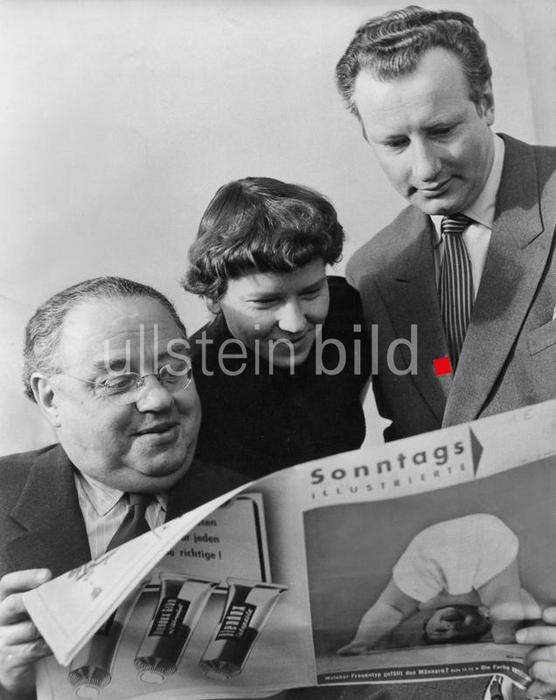
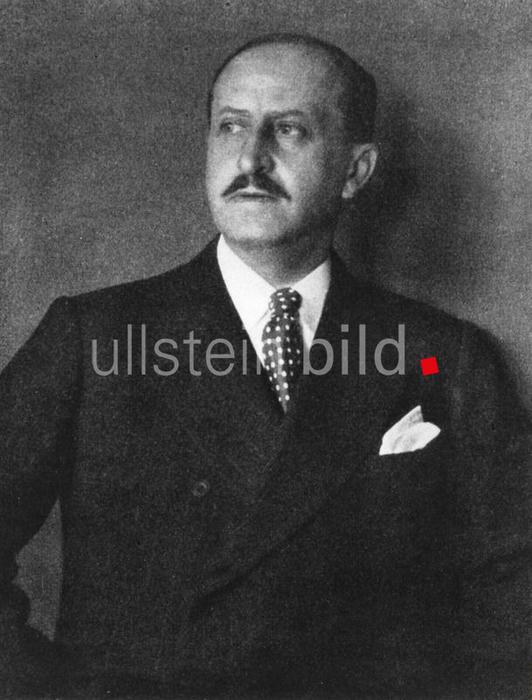
In the gallery, you will find a selection of original photographs of the ullstein bild collection and selected images from Kurt Safranski’s Dummy.I by Phoebe Kornfeld with permission from the New York Historical Society Time Inc. Archive and published with the permission of Safranski’s heirs Stacey and Devon Fredericks.
You will find more pictures on this topic at ullstein bild.
Picture gallery